
What We Do
Reactive maintenance for building services faults
Fault diagnosis and repair across mechanical, electrical and public health systems, coordinated to limit disruption and restore normal operation.
Overview
What reactive maintenance is
Reactive maintenance is work carried out in response to a fault that has already occurred, rather than as part of a pre-planned schedule. It covers everything from a dripping tap to a failed heating system, and spans mechanical, electrical and public health disciplines in the same way that planned maintenance does.
While planned preventative maintenance aims to reduce the frequency of faults, no maintenance programme can eliminate them entirely. Equipment can fail unexpectedly, components reach the end of their life sooner than anticipated, or external factors such as water ingress or power supply issues can cause faults that no amount of planned servicing would have prevented. Reactive maintenance exists to address these situations when they arise.

Emergency faults and routine faults
Not every fault carries the same level of urgency. An emergency fault is one that presents an immediate risk to safety, causes significant damage if left unresolved, or renders a building unusable, such as a major water leak, a total loss of power, or a heating failure during cold weather affecting vulnerable occupants.
Routine faults, by contrast, are issues that need attention but do not pose an immediate risk, such as a noisy fan, a flickering light fitting, or a dripping outlet. Distinguishing between these categories at the point of reporting helps to ensure that attention is directed appropriately, with the most serious issues addressed first.
- Emergency faults: safety or usability at risk
- Routine faults: attention needed but not urgent
- Correct categorisation supports appropriate prioritisation
- Clear reporting speeds up the right response
Getting started
Fault reporting and initial assessment
The reactive maintenance process begins when a fault is reported, whether by a building occupant, a facilities manager, or identified during a planned maintenance visit. A clear fault report, describing the symptoms, location and any relevant context, allows the right expertise to be directed to the issue without unnecessary delay caused by miscommunication.
Initial assessment follows the report, establishing the likely cause, the systems affected, and what is needed to investigate further. In some cases this can be done remotely from the description provided; in others, it requires an engineer to attend site and inspect the fault directly before a repair plan can be formed.
Scope
Faults across mechanical, electrical and public health systems
Reactive maintenance covers the same breadth of disciplines as planned maintenance, responding to faults as and when they occur.
Mechanical breakdowns
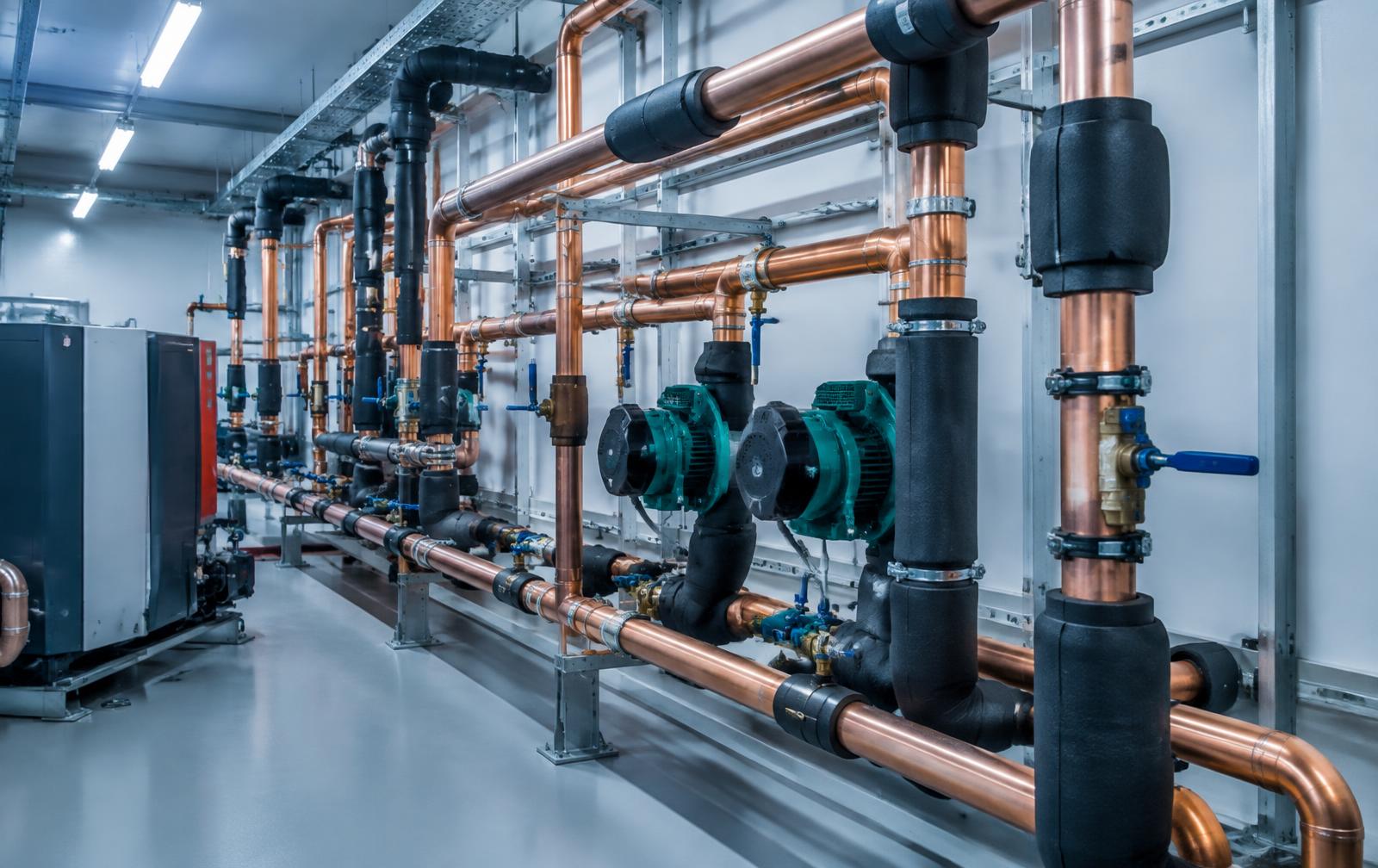
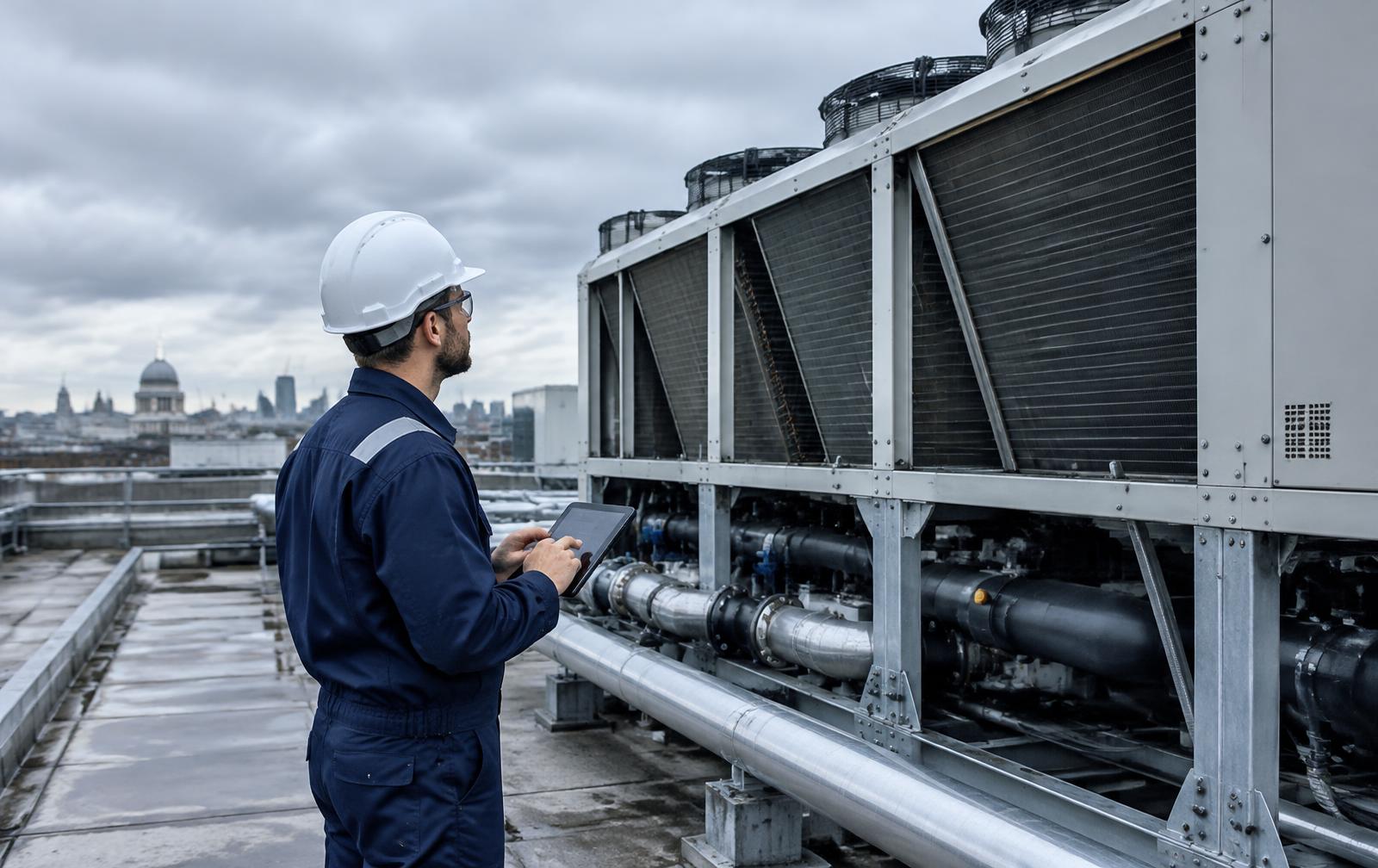
Boilers, chillers, pumps and air handling plant can fail due to component wear, control faults or mechanical damage, requiring diagnosis before a repair can be carried out.
Electrical faults
Tripped circuits, failed lighting, damaged containment or distribution board issues require careful diagnosis, particularly where safety is involved.
Plumbing faults
Leaks, blockages and failed fittings within water supply and drainage systems need prompt attention to limit water damage and disruption.
Heating and cooling failures
A loss of heating or cooling affects comfort directly and, in some settings, can present a safety concern that needs timely investigation.
Repair, coordination and parts
Once a fault has been diagnosed, a repair plan is formed, covering what work is needed, what materials or replacement parts are required, and how the repair will be carried out without creating further disruption. Where a specific part is required, lead time for sourcing it can affect how quickly a permanent repair can be completed, and a temporary measure may be put in place in the meantime where appropriate.
Coordination matters particularly where a fault affects more than one system, or where the repair itself requires isolating services that affect other parts of a building. Planning the sequence of work, and communicating it clearly to those affected, helps keep disruption to a minimum.
- Diagnosis before repair, not guesswork
- Materials and parts identified and sourced
- Temporary measures where a permanent fix needs time
- Isolations planned to limit knock-on disruption
Working safely
Disruption, safety and documentation
Reactive repairs often need to be carried out quickly, but speed should never come at the expense of safety or quality. Isolating the correct systems, following safe working procedures, and ensuring that any temporary measures do not introduce new risks are all essential, even when a repair is urgent.
Every reactive job should be documented in the same way as planned maintenance work: what was found, what was done, and what materials or parts were used. This record feeds into the wider asset history, so that recurring faults can be identified and addressed at their root cause rather than being repeatedly patched.
Follow-up and the relationship with planned maintenance
A reactive repair that resolves the immediate symptom does not always address the underlying cause. Follow-up involves checking that a repair holds, confirming that the fault does not recur, and, where appropriate, recommending further investigation or a permanent fix if a temporary measure was used.
Reactive maintenance and planned preventative maintenance work most effectively together. Faults identified reactively provide useful information for refining a planned maintenance schedule, while a well-run planned programme reduces how often reactive work is needed in the first place.
- Repairs checked to confirm they hold
- Temporary fixes followed up with permanent solutions
- Recurring faults fed back into maintenance planning
- Reactive and planned maintenance working together
Getting buildings back to normal, properly
When something goes wrong, the aim is to diagnose it accurately, repair it properly, and understand why it happened in the first place.
FAQs
Common questions
Related pages
Report a fault or discuss reactive support
If you would like to discuss reactive maintenance support for your building, get in touch and we will be happy to help.